
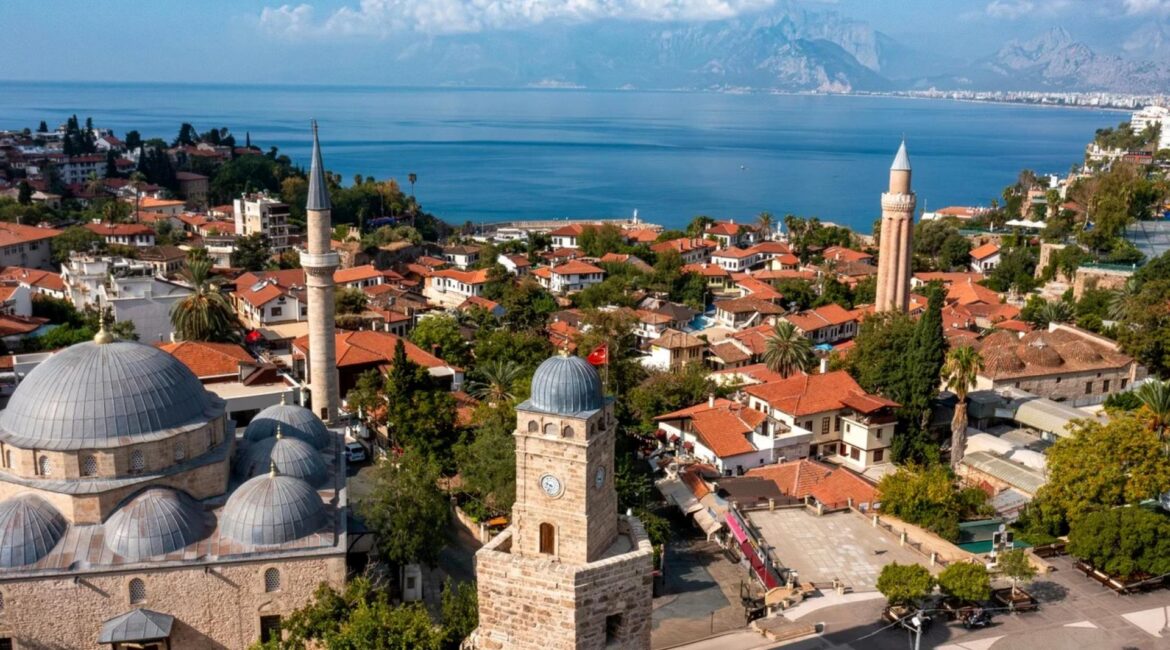
At COP31 in Antalya, Türkiye, the Partnership for Active Travel and Health (PATH) called on governments to fund and deliver on active travel commitments to reduce emissions and achieve global climate targets.
The 31st Conference of the Parties (COP) to the UN Framework Convention on Climate Change (UNFCCC) was hosted in Antalya, Türkiye, from 9 to 20 November 2026.
COP31 brought key developments in the international transport commitments. The Global Transport Effort (officially the Declaration for a Global Transport Effort: Accelerating Climate Action by 2035) is the international climate initiative launched at COP30 in Belém, Brazil, on November 14, 2025, to cut transport energy demand and shift toward clean energy. At COP31 the Dominican Republic, Presidency of the Declaration, hosted “One Year of the Ministerial Declaration: Tracking the Global Transport Effort” a session to take stock of the first year of the coalition and look at what comes next. Three new countries joined as signatories; Panama, Grenada, and Bolivia, while a conversation among new and longstanding signatories shared good practices for putting the Declaration’s commitments into practice. The Dominican Republic also presented the coalition’s first Annual Report.
Making a case for walking and cycling
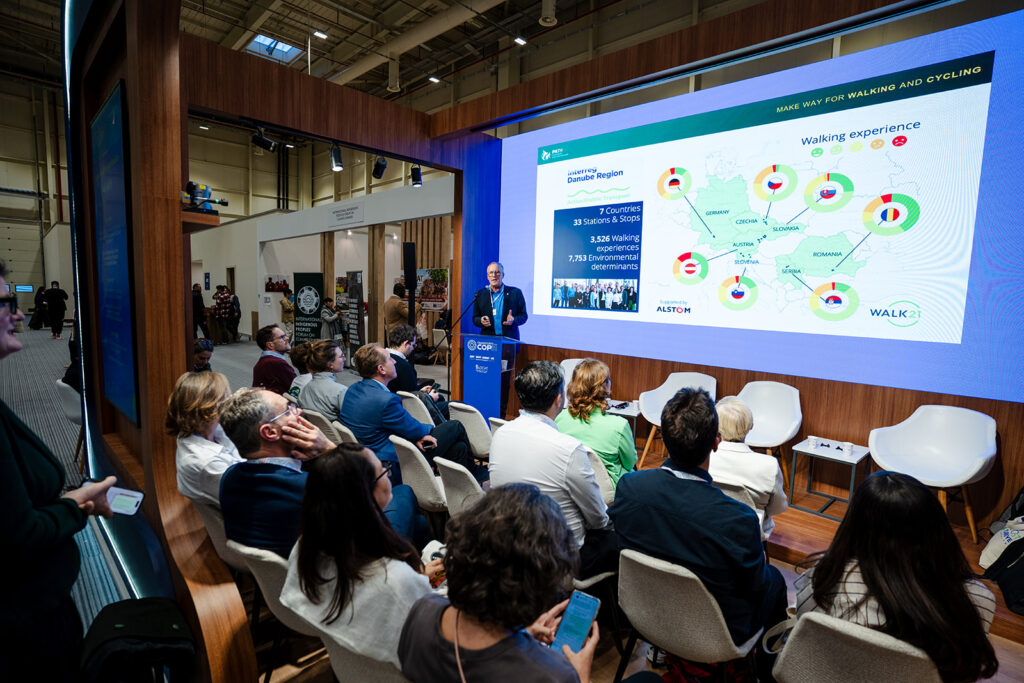
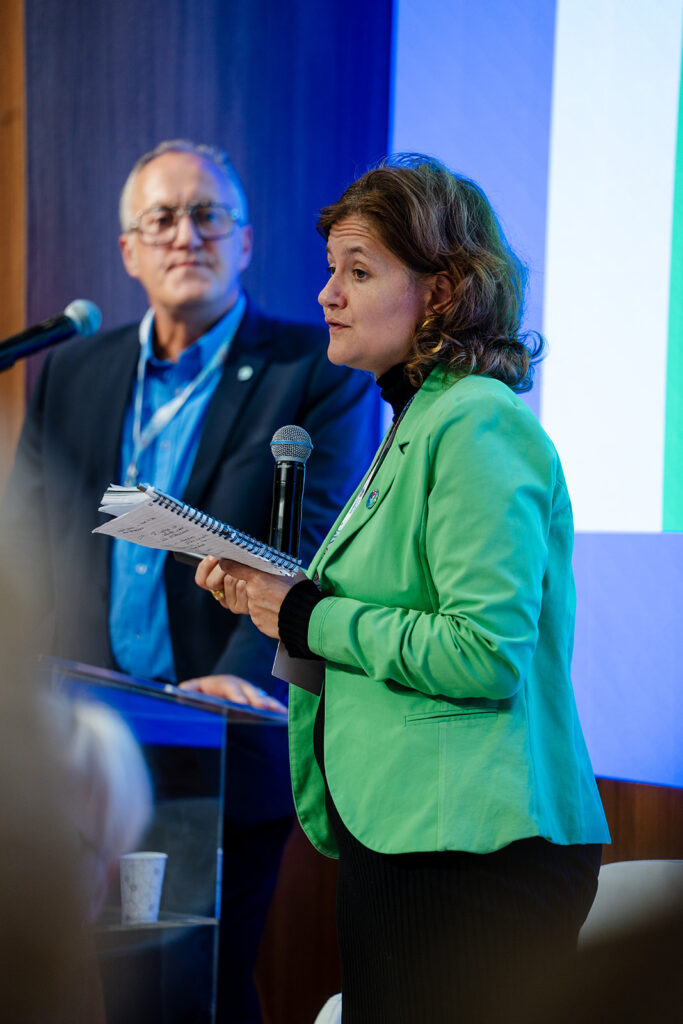
PATH partners Walk21 and ECF contributed to seven COP31 events: one Official Side Event and six additional Blue Zone Pavilion Events. Together, these sessions addressed the role of walking and cycling in climate mitigation and adaptation, sustainable development, transport accessibility and the transition towards low-carbon mobility.
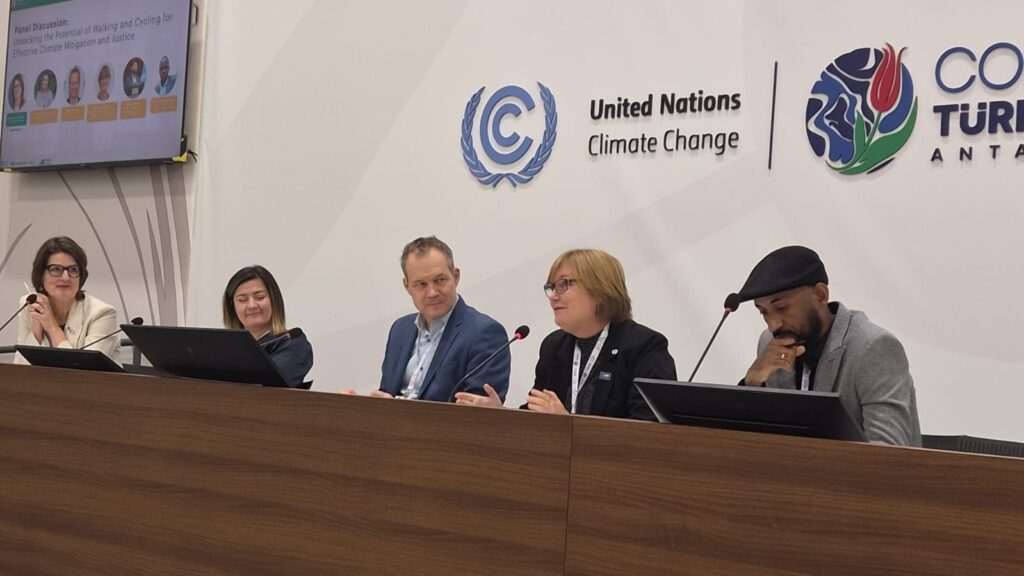
The Official Side Event, “Unlocking the potential of walking and cycling for effective climate mitigation and justice”, organised by ECF, FIA Foundation, Walk21 and MobiliseYourCity, focused on the role of active mobility in reducing transport emissions and advancing climate justice. Bringing together high-level speakers from UNHABITAT, ITDP Africa, UNEP and MobiliseYourCity, sustainable transport initiatives and local government, the session explored how local and national governments can translate walking and cycling commitments into action through effective planning, targeted investment and measurable progress. Particular attention was given to integrating active mobility into national climate strategies and ensuring that walking and cycling contribute to healthier, safer and more inclusive communities.
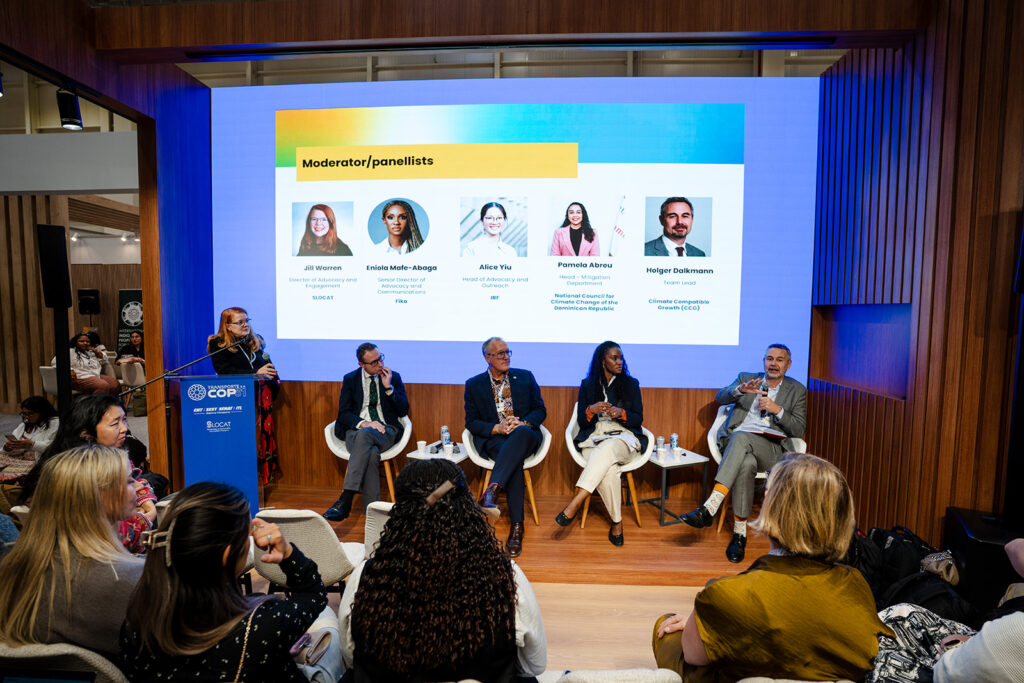
Across the Blue Zone Pavilions, discussions highlighted the role of walking and cycling in reducing transport emissions, improving accessibility and supporting more inclusive and sustainable communities. The sessions also connected active mobility to wider policy priorities, including the Sustainable Development Goals (SDGs), public transport integration and the development of safer, more accessible road networks. Particular attention was given to measuring progress on active travel, strengthening advocacy for low-carbon mobility and encouraging cycling through community initiatives.
Official Side Event
- Unlocking the potential of walking and cycling for effective climate mitigation and justice, organised by ECF, MobiliseYourCity and FIA Foundation
Blue Zone Pavillion Events
- Bridging the Gap: Connecting People, Places and Opportunities to Accelerate SDG Delivery, organised by SLOCAT and UN-HABITAT
- Making Good Noise Workshop: The Power of Advocacy for Sustainable Low Carbon Mobility, organised by SLOCAT, Fika and IRF
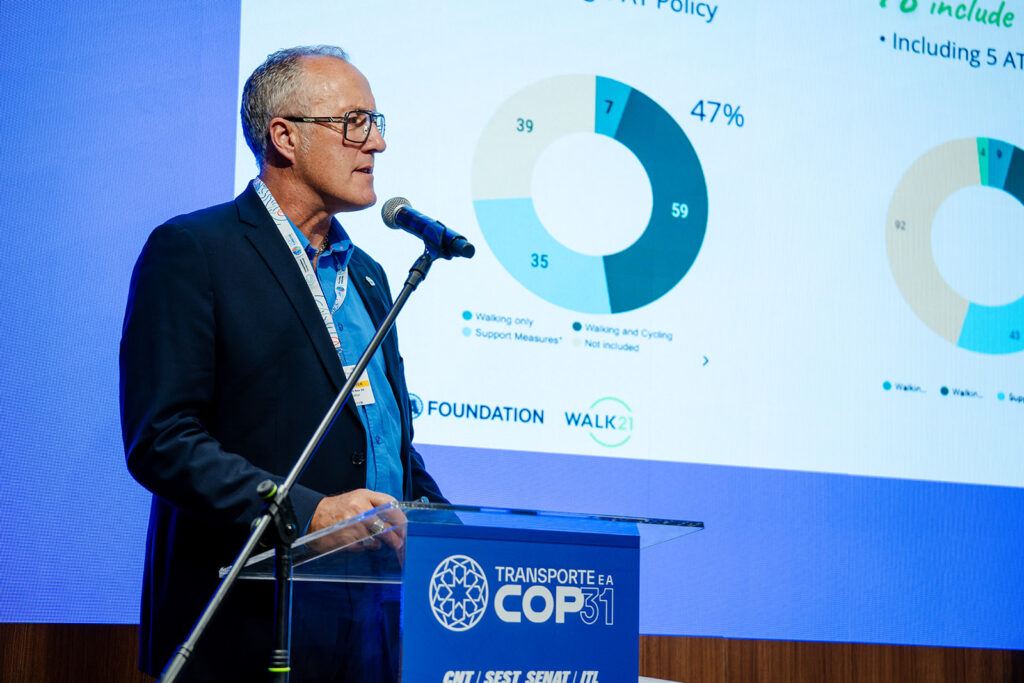
- Making Active Travel Count, organised by Walk21 and PATH
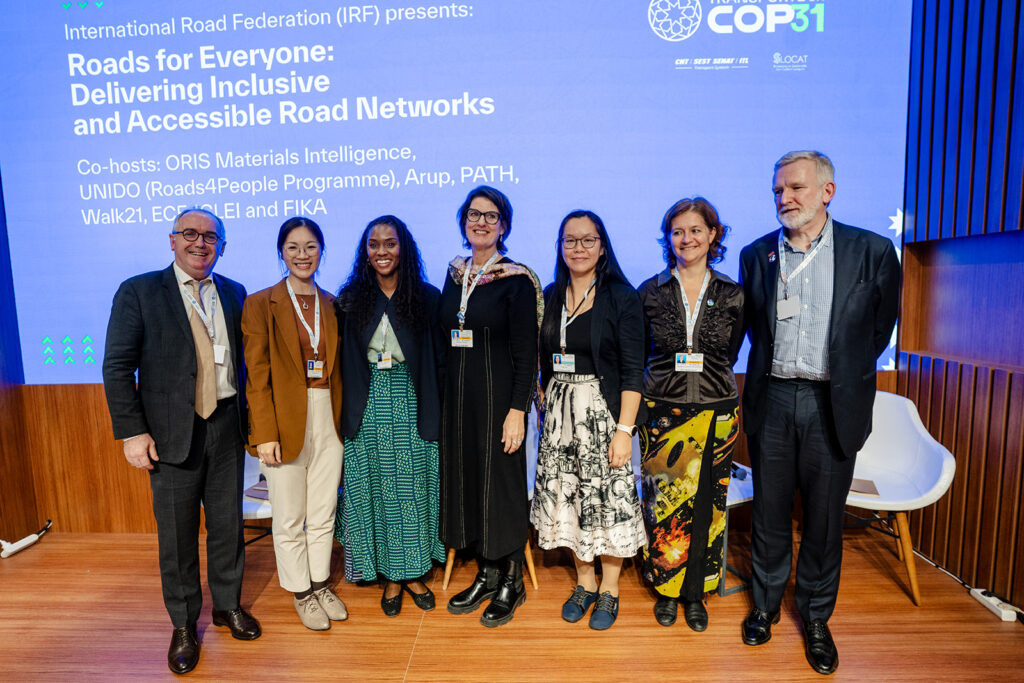
- Roads for Everyone: Delivering Inclusive and Accessible Road Networks, organised by IRF, ORIS Materials Intelligence and the United Nations Industrial Development Organisation (UNIDO) through the Roads4People Programme, Arup, PATH, Walk21, ECF, ICLEI and FIKA
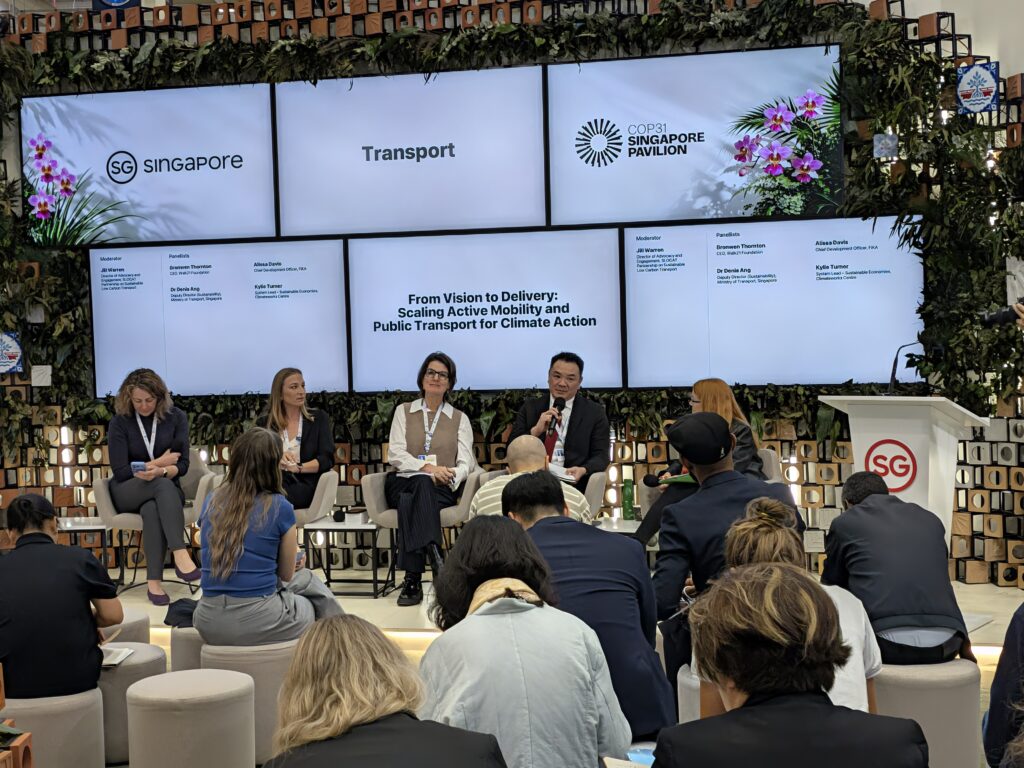
- From Vision to Delivery: Scaling Active Mobility and Public Transport for Climate Action, organised by SLOCAT and PATH
- Fit India: Sundays on Cycle, from a Weekly Ride to a Way of Life, organised by Fit India Movement, Ministry of Youth Affairs and Sports


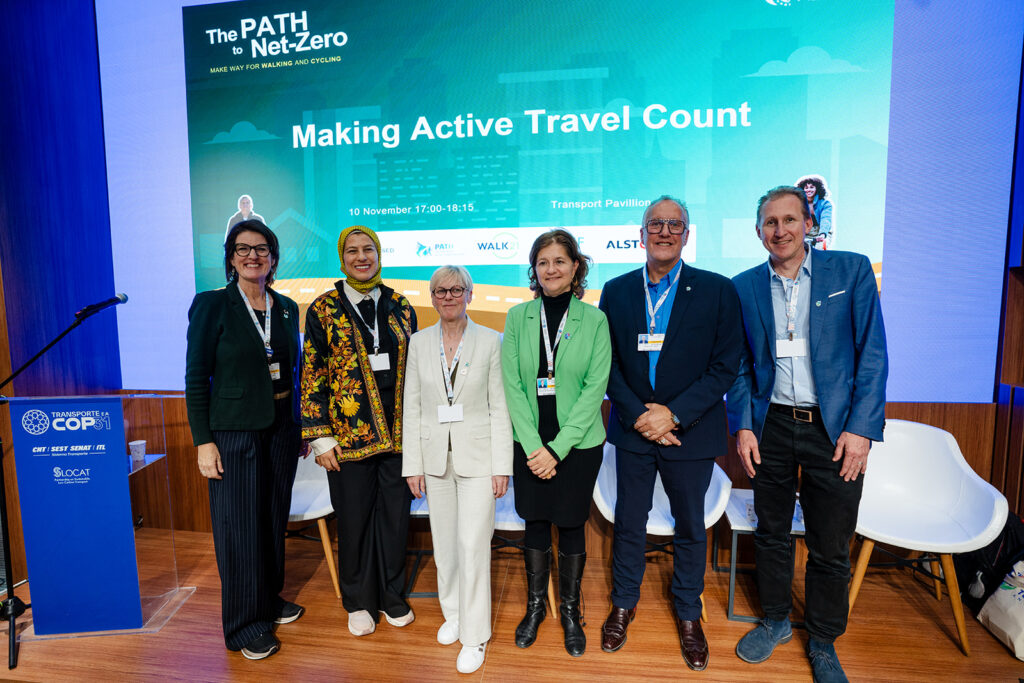
The PATH to Net-Zero: PATH’s call for funding and implementation of active travel commitments at COP31
At COP31, PATH brought its “The PATH to Net-Zero” campaign to the international climate discussions, calling on governments to fund and deliver on active travel commitments to reduce emissions and achieve global climate targets.
Over a third of UNFCCC countries have walking and cycling in their Nationally Determined Contributions (NDCs). But research from the Partnership of Active Travel and Health (PATH) shows that many still lack proper mechanisms to steer investment and ensure maximum impact to translate these commitments into tangible results.
A report by the UN Environment Programme states that the world is unlikely to hit the Paris Agreement target of limiting global temperature increase to 1.5’C, with the best-case scenario reaching 1.8 degrees. Walking and cycling can help cut transport emissions in half by 2030—every stride and ride counts towards achieving climate goals.
Through its COP31 advocacy, PATH emphasised two priorities for governments:
| Fund + Evaluate | Implement + Deliver |
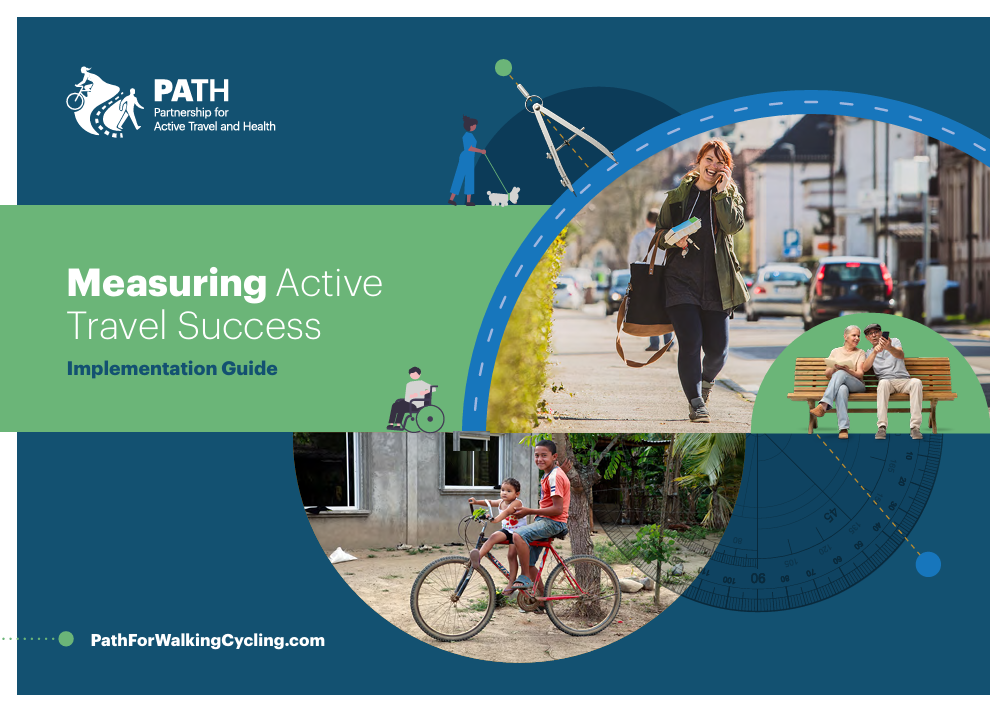
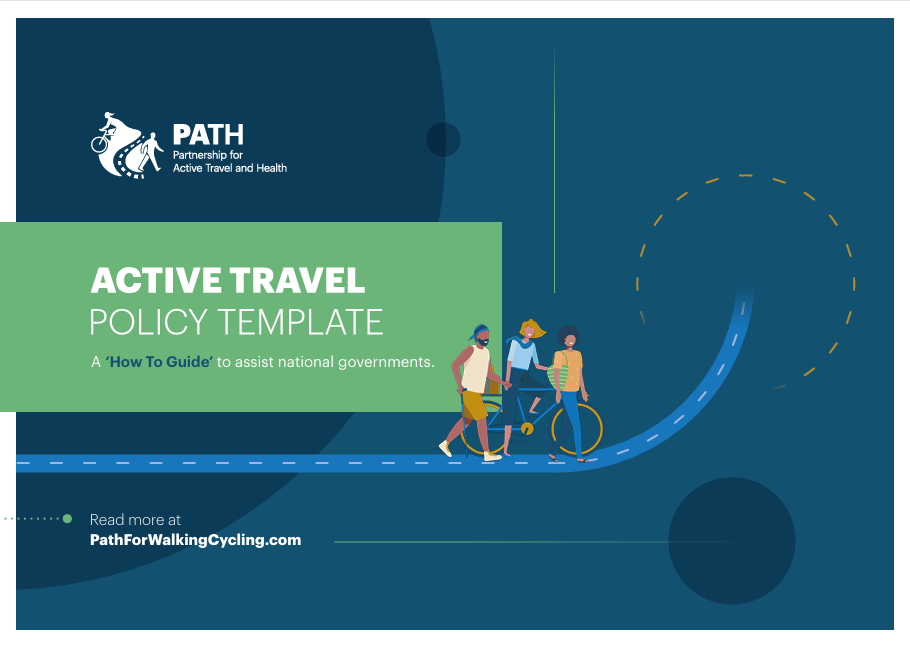
| Success indicators are key to making a strong business case for active travel. It is also crucial for accountability, effective resource allocation, and targeted investment. PATH’s Measuring Active Travel Success Implementation Guide is the world’s first comprehensive measuring system for active travel and a valuable resource designed to help governments. | Enabling people to walk and cycle, creating walkable and bikeable places and embedding active travel into existing processes requires clear, coherent planning. PATH’s Active Travel Policy Template is a step-by-step guide to setting goals, objectives, actions, measures and outcomes and has already been adopted by many national governments. |
 |  |
Both priorities addressed PATH’s central message at COP31: governments must support their climate commitments with sustained investment, effective implementation and measurable progress. Expanding access to safe and accessible walking and cycling can contribute to reducing transport emissions while also supporting public health, improving air quality and creating more inclusive communities.
Looking ahead
The growing recognition of the role of walking and cycling in the decarbonisation of transport and improving people’s health and lives are encouraging signs for the future. COP32 host Ethiopia has shown leadership in banning ICE vehicles, electrifying buses and investing in quality walking and cycling networks as part of their national policy commitment to have 80% sustainable trips. Ethiopia has also been recognised as one of PATH’s Active Travel National Case Studies. Furthermore, PATH as part of the wider sustainable transport community under SLOCAT’s leadership, is advocating for the second Global Stocktake to be anchored in the Paris Agreement, for a full implementation of Nationally Determined Contributions (NDCs) and National Adaptation Plans (NAPs). A focus on funding and implementation, especially adaptation finance is key for any further progress. The PATH coalition stands ready to support governments in making and implementing commitments that will enable many more people to walk and cycle safely around the world.