
Theodore Koumelis — 10 November 2026 | Read the original article
At COP31 in Türkiye, PATH urges governments to fund active travel commitments, strengthen walking and cycling policies, and measure progress towards reducing transport emissions and improving public health.
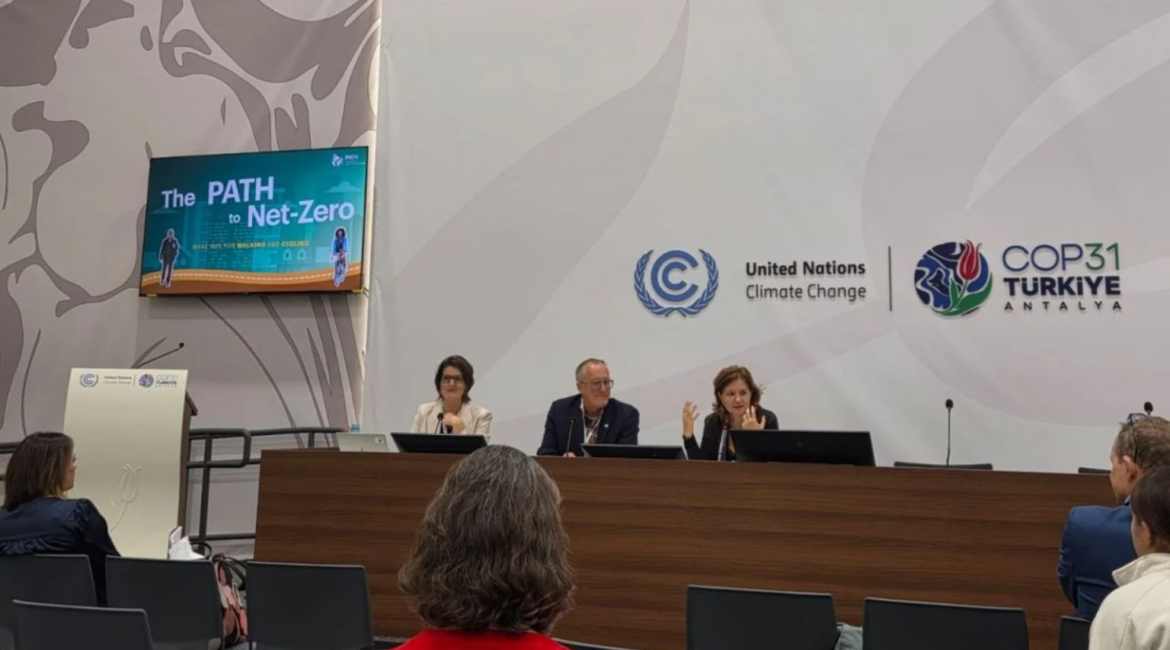
Governments must strengthen funding and implementation of active travel commitments to meet global climate targets, according to PATH. The Partnership for Active Travel and Health presented its campaign, The PATH to Net-Zero, during COP31 in Antalya, Turkey. The initiative calls for greater investment in walking and cycling infrastructure, supported by clear policies and measurable outcomes.
PATH is participating in COP31 discussions to highlight the role of active mobility in reducing transport emissions. Its campaign focuses on translating national climate commitments into practical measures that encourage walking and cycling.
The initiative aligns with three priorities at the international climate conference. These include implementing national emissions targets, delivering climate finance and strengthening resilience against climate-related risks.
Under the Paris Agreement, countries submit Nationally Determined Contributions (NDCs) outlining their commitments to reducing greenhouse gas emissions. COP31 discussions also address the climate finance target established at COP29, particularly its implications for developing countries.
PATH calls for stronger implementation of walking and cycling policies
More than one-third of countries participating in the UN climate convention include walking and cycling within their NDCs. However, PATH research indicates that many governments lack sufficient mechanisms to direct investment and evaluate progress.
These shortcomings can limit the effectiveness of national commitments to sustainable transport. PATH therefore advocates coordinated policies, dedicated funding and transparent performance measurement.

The organisation argues that expanding active mobility can reduce transport emissions while supporting public transport networks. Additional benefits include lower air pollution, improved road safety and better public health outcomes.
Also read → PATH Coalition launches global walking and cycling for climate case studies for COP29
Sheila Watson, Deputy Director of the FIA Foundation, said: “We cannot reach our climate goals without active transport. Even if we shifted all motorised transport from fossil fuels to electricity, it still would not be enough to protect us from the worst climate impacts. PATH is providing the message and the solutions for countries willing and ready to do the right thing for health, people and planet.”
The campaign highlights the importance of combining transport electrification with policies that reduce dependence on motorised travel. It also encourages governments to incorporate active mobility into broader transport and urban development strategies.
Active mobility and the challenge of reducing transport emissions
PATH’s campaign comes amid continuing concerns about progress towards international climate targets.
A report by the United Nations Environment Programme (UNEP) warns that current global action remains insufficient to meet the Paris Agreement’s temperature objectives. The agreement seeks to limit warming to 1.5°C above pre-industrial levels.
According to the findings cited by PATH, even the most favourable scenario projects warming of approximately 1.8°C.
PATH argues that walking and cycling could help halve transport emissions by 2030. This potential contribution underscores the importance of incorporating active mobility into national climate policies.
Bronwen Thornton, CEO of the Walk21 Foundation, said: “Walking and cycling are essential to achieving our climate goals, but commitments alone are not enough. Governments need to turn their ambitions into action through clear policies, sustained investment and measurable progress. By doing so, we can reduce emissions while creating healthier, safer and more inclusive communities.”
The campaign also identifies active transport as a means of improving accessibility and creating more inclusive urban environments. Investment in pedestrian and cycling infrastructure can complement public transport while supporting healthier communities.

For cities and tourism destinations, these measures also relate to accessibility, public space management and sustainable visitor mobility. Walking and cycling networks can connect accommodation, transport hubs, attractions and local businesses.
New policy resources support funding and implementation
To support governments, PATH has developed resources addressing two main priorities: investment evaluation and policy implementation.
The first, Measuring Active Travel Success Implementation Guide, provides a comprehensive framework for evaluating walking and cycling initiatives. PATH describes it as the world’s first comprehensive measurement system specifically developed for active travel.
The guide aims to help governments establish performance indicators, assess investment outcomes and strengthen accountability. Reliable measurement can also support funding decisions and identify areas requiring additional intervention.
The second resource, Active Travel Policy Template, offers practical guidance for developing national walking and cycling policies. It outlines steps for defining objectives, identifying actions, establishing indicators and evaluating results.
According to PATH, several national governments have already adopted the template. The organisation encourages wider use of both resources to improve policy consistency and implementation. Clear planning remains central to developing accessible pedestrian networks and safe cycling infrastructure. PATH also recommends integrating active mobility into existing transport policies rather than treating it as a separate activity.
Such integration can strengthen connections between public transport, urban planning, environmental policy and public health strategies.
Governments urged to increase investment in active mobility
At COP31, PATH is encouraging government leaders to allocate funding and implement their existing active travel commitments.
The campaign also calls on active mobility advocates to engage policymakers and promote investment in walking and cycling infrastructure.
Its recommendations emphasise measurable results, sustained public funding and policies that support accessible transport for different population groups.
Laurianne Krid, CEO of the European Cyclists’ Federation, said: “Part of PATH’s work is to identify and showcase countries that have invested in walking and cycling, recognising their multiple benefits to society. Indeed, walking and cycling are resilient modes of transportation that not only address climate change but build healthier, more inclusive communities. COP31 is a unique forum to inspire more national governments to deploy active travel as solutions and unlock them to their fullest potential through funding and measuring outcomes.”
The campaign also highlights the role of international cooperation in sharing effective approaches to active mobility investment. Examples from countries implementing walking and cycling policies can inform future national strategies.
For tourism destinations, stronger active mobility networks can support sustainable transport planning and improve access to local attractions. These considerations are particularly relevant to destinations managing congestion, visitor movements and environmental pressures.
PATH’s participation at COP31 reinforces its call to move from policy commitments towards measurable implementation.
Through The PATH to Net-Zero, the partnership seeks greater government investment, stronger accountability and wider integration of walking and cycling into climate action.