
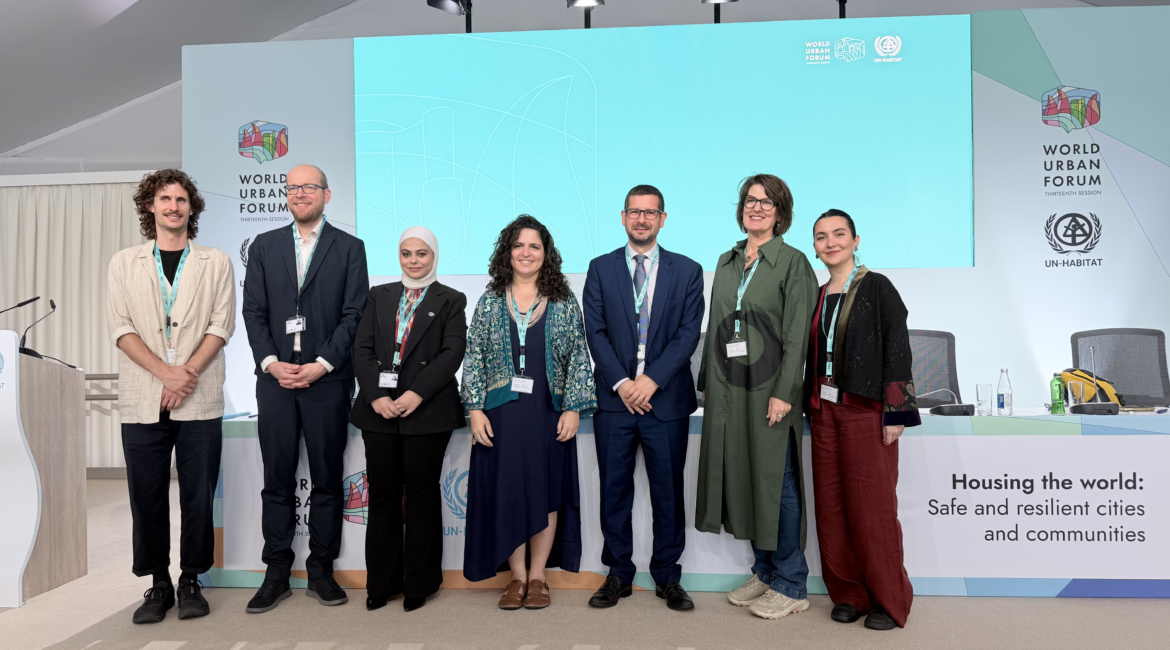
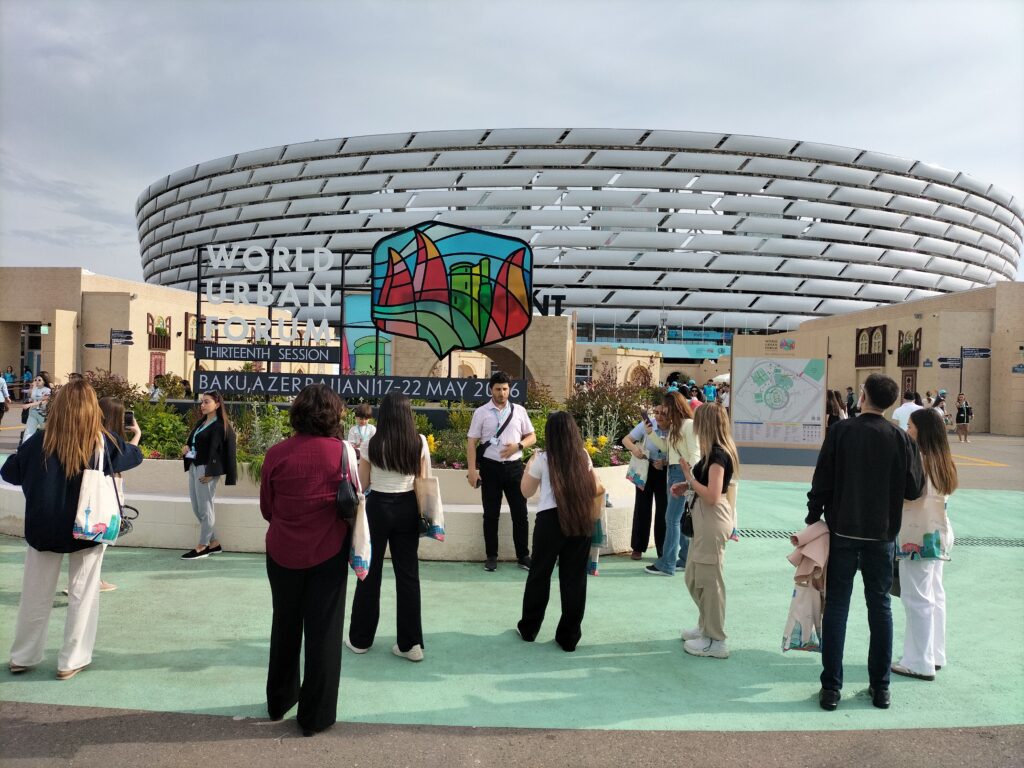
The thirteenth session of the World Urban Forum (WUF 13) was hosted by the city of Baku, Azerbaijan. Convened by UN-Habitat, the World Urban Forum is the premier global conference on sustainable urbanisation. It brings together representatives of national, regional, and local governments, as well as experts in the academe, industry, urban planning, and civil society.
From 17-22 May 2026, over 57,000 participants from 176 countries were present to engage in discussions around this year’s theme, “Housing the world: Safe and resilient cities and communities.” It focuses on exploring solutions to address the global housing crisis and position housing as a driver of inclusive, resilient and sustainable urban development.
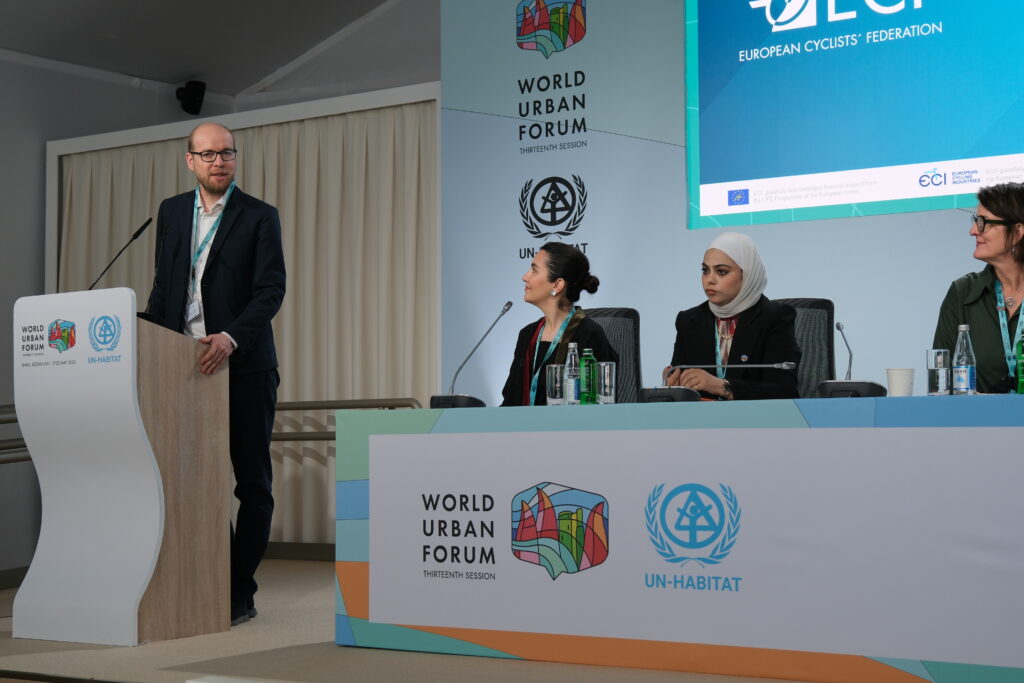
PATH represented at panel session connecting mobility and housing
The Partnership for Active Travel and Health (PATH) participated in a session titled “Why affordable housing needs fewer cars,” represented by Fabian Küster (Advocacy and EU Affairs Director, European Cyclists’ Federation) and Bronwen Thornton (Chief Executive Officer, Walk21 Foundation). They were joined by representatives from UN-Habitat, Instituto de Pesquisa e Planejamento – IPPLAN Fortaleza (Brazil), Area Metropolitana De Barcelona, and the Ministry of Public Works and Housing of Jordan.
Affordable housing and urban mobility are too often treated as separate policy domains. This session challenges this separation and argues that car-oriented planning is a structural driver of rising housing costs, spatial inequality and declining quality of life in cities worldwide. Discussions explored how reducing car dependency and reclaiming urban space can make housing more affordable and cities more inclusive.
Some key messages raised by PATH:
- Minimum car parking norms should be substituted with maximums
- Car parking management makes housing construction more affordable and encourages tenants and owners to use modes of transport other than the car
“As far as Europe is concerned, it is clear that billions of Euros from EU funds will be invested in the housing sector in the years to come,” says Fabian Küster. “Affordability is one of the topics that wins or loses elections. But it is critical that the housing we provide in the future will be prioritising walking, cycling, public transport and shared mobility options. The use of the individual private car has to be the last option.”
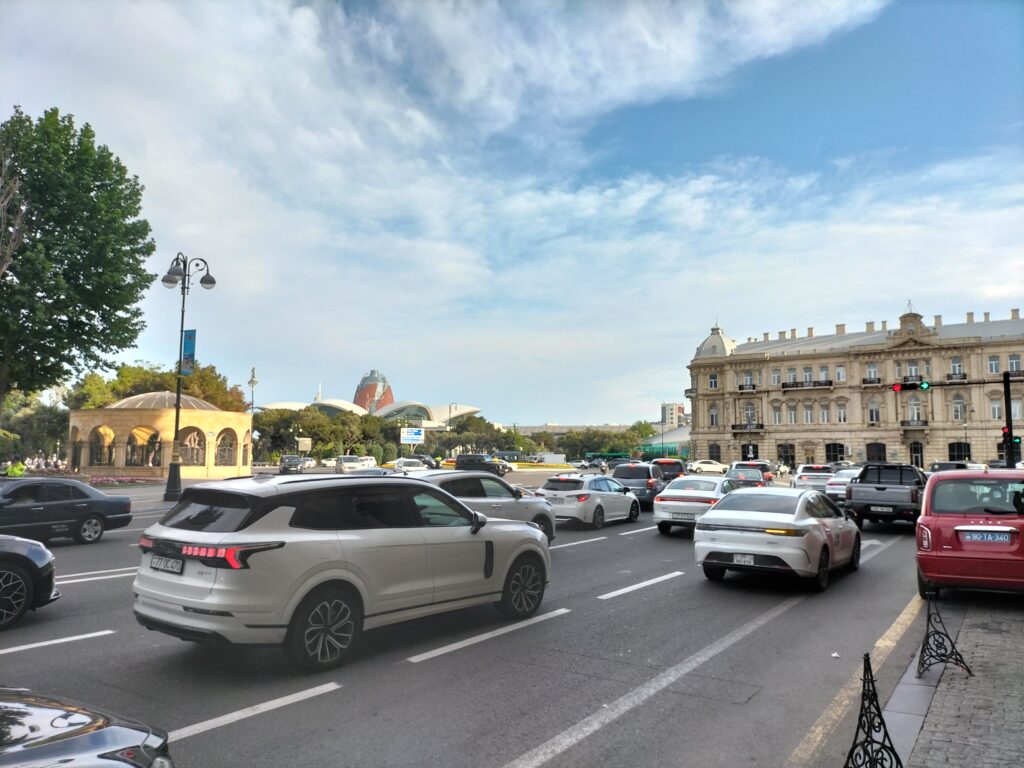
PATH represented at session on nature-based solutions
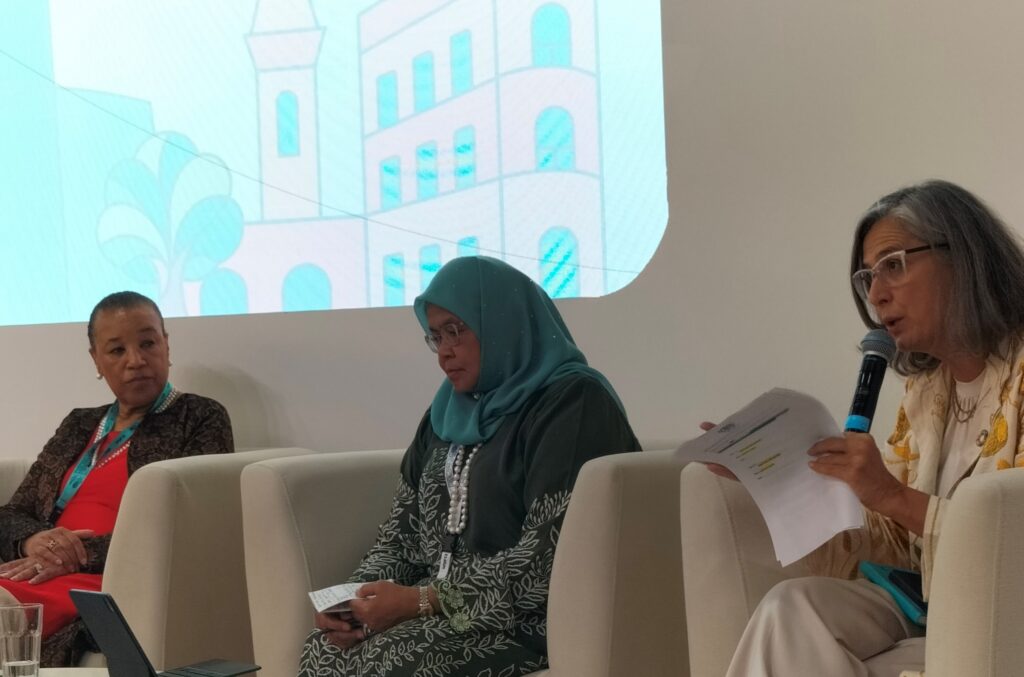
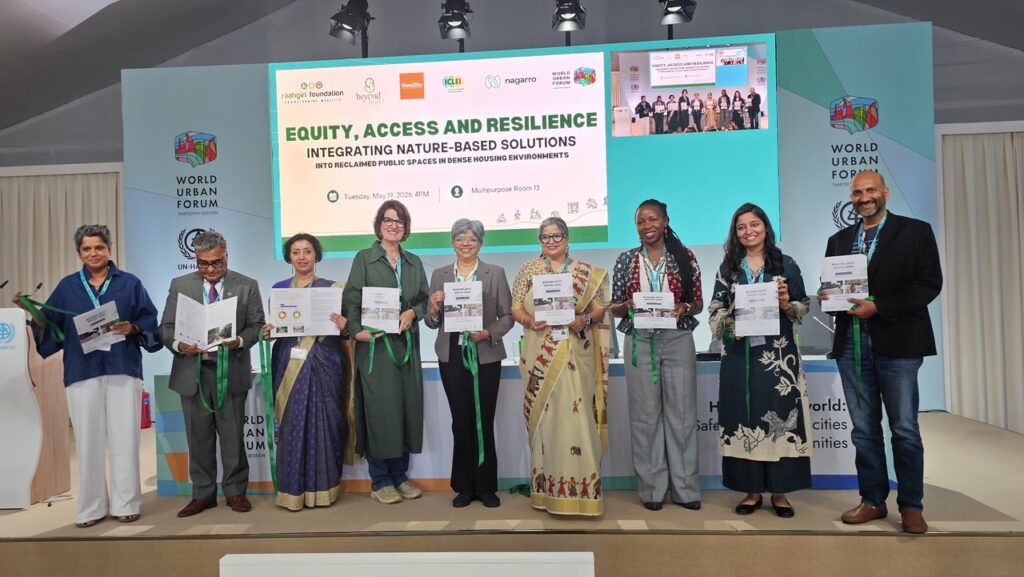
Bronwen Thornton also spoke at another session called “Equity, Access & Resilience-Integrating Nature-based Solutions in Reclaimed Public Spaces in Dense Housing Environments.”
Using Gurugram’s Badshahpur Forest Corridor as a key example, the session shows how reclaimed spaces can be transformed into a green, accessible corridor for walking and cycling, connecting communities across diverse neighborhoods.
Call for stronger integration of mobility and other social dimensions in urban planning
The conference was teeming with energy and ideas, many of which reinforcing the importance of well-integrated urban planning that considers mobility, livelihoods, and more. This message had a dedication section in the non-binding Baku Call to Action under “Home as the catalyst for integration”:
“Housing is too often located in isolation from infrastructure, essential services and economic opportunities, with urban sprawl, spatial segregation and poorly coordinated land-use planning pushing low-income households into peripheral and exclusionary areas far from jobs, services and opportunities. We call for an integrated and participatory spatial planning approach, with a gender lens, that connects housing with transport, services, livelihoods, and natural and cultural heritage, while promoting mixed, inclusive and well-serviced intergenerational neighbourhoods.”